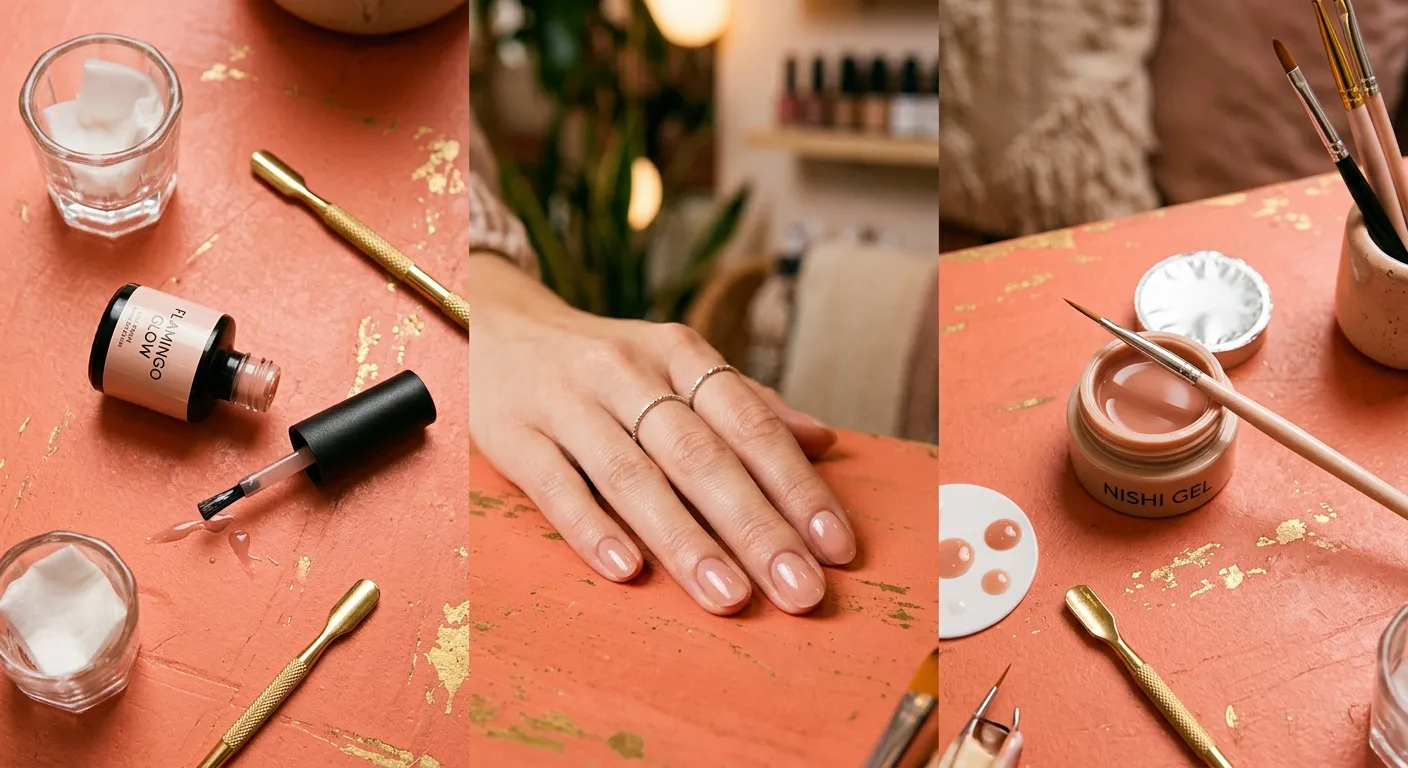
Japanese gel versus regular gel polish. My clients started asking about it last fall, and by January I had ordered four pots of Kokoist and a set of flat art brushes to find out for myself. Six months later, I run both systems on my station depending on the client and the service. The comparison is not as simple as the internet makes it sound, and the right answer depends on what kind of work fills your book.
Regular gel polish comes in a bottle with a built-in brush, cures under LED or UV in 30 to 60 seconds per coat, and produces the glossy, chip-resistant finish that has been the salon standard for over a decade. Japanese gel comes in a small pot, gets applied with a separate brush, and cures into layers so thin you can barely feel them on the nail. The formulas tend to be lower in acidity, higher in pigment concentration, and more flexible once cured. Brands like Presto, Kokoist, Vetro, and Leafgel dominate the professional market in Japan and have been crossing into American salons steadily since 2023.
The distinction matters because the application method changes everything downstream: how the product sits on the nail, how long it lasts, how it removes, and what you can charge for it.
How the two systems compare
| Attribute | Regular Gel (Bottle) | Japanese Gel (Pot) |
|---|---|---|
| Application tool | Built-in bottle brush | Separate art brush (flat, oval, or detail) |
| Layer thickness | 0.5–0.8mm per coat | 0.2–0.3mm per coat |
| Typical wear time | 14–18 days | 21–28+ days |
| Pigment density | Standard, 2–3 coats for opacity | High, often opaque in 1–2 coats |
| Removal | Acetone soak-off (10–15 min) | Acetone soak-off or gentle file-down |
| Nail art suitability | Good for solid color, limited for detail | Excellent for fine art and blending |
| Average salon price | $35–$55 | $65–$90 |
| Product cost per jar/bottle | $8–$15 | $12–$18 |
The numbers that matter most to me as a tech are layer thickness and wear time. Japanese gel builds a finished manicure that measures roughly half the thickness of a standard gel set. Clients notice. The nails feel lighter, more natural, closer to their own nail plate. That thinness also means less product sitting on the surface, which reduces the leverage that catches and impacts have when they hit the free edge. Several of my regular gel clients would come back at two weeks with a chip on one or two nails. The same clients on Japanese gel consistently make it to three weeks without a call.
The wear difference tracks with what Who What Wear reported after testing Japanese gel firsthand: the manicure outlasts standard gel by a week or more, and the shine holds. Marie Claire’s breakdown confirms the thinner-layer claim and notes that lower acidity in the formula means less stress on the nail plate over repeated applications.
Where each system wins
Regular gel is fast. I can finish a solid-color gel manicure in 25 to 30 minutes. The bottle brush covers the nail in two or three efficient strokes. For clients who want a clean, glossy look and plan to come back in two weeks, standard gel does exactly what it needs to do. The product is widely available, the price point is accessible, and most techs already know the system. If your salon runs high volume on basic gel manicures, switching everything to pot gel would slow you down without necessarily adding enough ticket value to justify the time.
Japanese gel wins on precision, longevity, and the premium experience. The separate brush gives me control I cannot replicate with a bottle brush. Detailed nail art, thin French lines, gradient blends, layered color work: all of it is cleaner with a pot system. The consistency of Japanese gel sits differently under the brush. It holds where you place it instead of self-leveling into the cuticle line the way thinner bottle gels sometimes do. For the kinds of intricate work I wrote about in my piece on Korean nail art trends, pot gel is a genuine upgrade.
The pricing math favors Japanese gel too. Product cost per pot is slightly higher, but you use less per nail because the layers are thinner and the pigment is more concentrated. A $15 pot of Kokoist lasts me roughly 40 to 50 full sets. At $75 per Japanese gel manicure versus $45 for standard gel, the revenue per hour increases even though the service takes ten to fifteen minutes longer.
2009
Presto launches the first 100% LED-curing Japanese soft gel, removing the need for UV lamps
2018–2020
Japanese and Korean gel brands gain traction on Instagram through nail art communities in NYC and LA
2023
Dedicated Japanese gel salons open in major U.S. cities; American techs begin importing Kokoist and Vetro
2025–2026
Mainstream beauty press covers Japanese gel as a premium alternative; salon adoption accelerates nationwide
Who each option actually serves
If your book is primarily solid-color gel manicures at a $35 to $55 price point, regular gel is your workhorse. It is efficient, reliable, and the margin is already built into your schedule. Clients who come every two weeks for a fresh color do not need pot gel precision, and charging them $75 for the same look in a different formula is a harder sell.
If your book includes nail art, specialty finishes like the chrome work I covered recently, or clients who specifically request longer wear and a thinner feel, Japanese gel earns its price. The clients asking about it already know what they want. They have seen the pot system on TikTok or tried it at a Japanese nail salon and now they are looking for a tech closer to home who offers it. That client will pay $75 to $90 without hesitation because they are buying a different experience, not just a different product.
The U.S. nail salon market is projected to reach $20.3 billion by 2030, with UV gel services growing at 9.5% annually. Within that growth, premium gel services are the segment expanding fastest. Japanese gel slots directly into that demand. You do not need to replace your entire product line. Adding a pot gel option as a premium tier gives clients a reason to book a higher-ticket service while your standard gel menu stays intact.
My honest recommendation
I keep both on my station. Regular gel for the Tuesday afternoon client who wants ballet pink and needs to be out in thirty minutes. Japanese gel for the Saturday morning client who brings a Pinterest board of layered gradient designs and wants the set to last until her next appointment in four weeks. The two systems are not competing. They serve different clients at different price points, and a nail tech who can offer both has a wider booking range than one who commits entirely to either.
If you have been curious about pot gel and you already do nail art, order one base, one top, and three colors from a brand like Kokoist or Leafgel. Budget around $80 for a starter set. Practice on yourself for two weeks before putting it on a client. The brush technique is different from what bottle gel trains you to do, and the learning curve is real but short. Once your hand adjusts, you will understand why the techs who switched are not switching back.