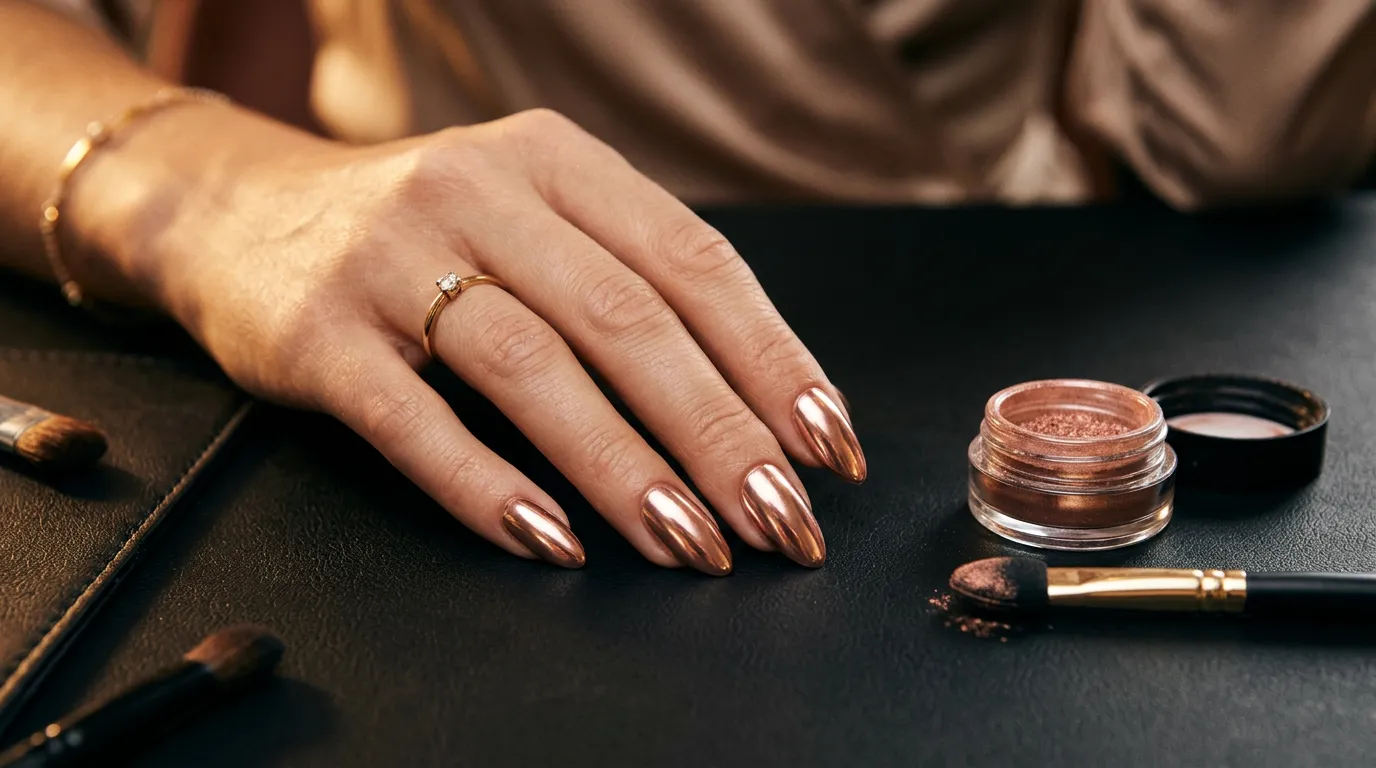
Ten dollars. That is what most salons add for chrome powder on a full set. Ten dollars for a finish that requires a flawless gel base, careful curing timing, precise pigment application with a silicone tool, and a no-wipe top coat that has to seal without dulling the mirror effect. I have done chrome sets where the powder step alone took fifteen minutes across ten nails, and I have had clients send the set back because one nail looked cloudy instead of liquid-metal. For ten dollars.
The chrome nail trend is not new. Hailey Bieber’s glazed donut manicure went viral in 2022 after nail artist Zola Ganzorigt created it last-minute before the Met Gala, and chrome powder sales have climbed steadily since. But the pricing never caught up with the demand. A Salon Geek forum thread on chrome pricing reads like a support group: techs charging five dollars extra, ten dollars extra, agonizing over whether fifteen is too much. Meanwhile the nail polish market is projected to reach $25.8 billion by 2030, and chrome finishes are a consistent driver. Clients are paying. They just need to pay the right amount.
Chrome Adds Time and Risk
A standard gel manicure involves base coat, two color coats, and a top coat. Chrome adds a minimum of two extra steps: the pigment application itself and a second top coat to lock the finish. Most techs also half-cure the first top coat to get the right tackiness for the powder to grab. That half-cure trick is not in any beginner manual. It comes from practice, from ruining sets and learning what forty-five seconds in the lamp versus sixty seconds does to the adhesion. The whole process adds ten to fifteen minutes to a set. At a rate of a dollar a minute, which is low for a skilled tech, that is ten to fifteen dollars in labor before you count the product.
The product itself is cheap. A jar of chrome pigment costs five to eight dollars and lasts dozens of sets. But the TikTok narrative that chrome powder costs five dollars on Amazon so the salon markup is “insane” misses the point entirely. Clients are not paying for powder. They are paying for the tech who knows how to make the powder look like mercury on every single nail, with no streaks, no dull patches, no lifting at the cuticle line.
What the Upcharge Should Look Like
I charge twenty dollars for chrome on a full set and twenty-five for specialty chromes like aurora or color-shifting pigments. That puts my chrome gel manicure at $65 to $70 total, which is in line with what salon pricing data suggests for specialty finishes in metro markets. Some of my clients blink at first. None have left over it. Chrome is a look they came in specifically wanting, and they came in because they cannot do it at home with the same result.
If you are still charging chrome as a five-dollar add-on, price it the same way you would any specialty salon add-on: time plus skill plus product, not product alone.
The Quiet Part
Chrome shares something with quiet luxury nails: both demand a level of precision that basic gel work does not. A single uneven nail ruins the whole set because the mirror finish makes every imperfection visible. That is advanced work. Price it that way.
Pinterest searches for icy blue chrome are up 235 percent heading into 2026, and glass chrome is one of the defining nail aesthetics of the year according to Who What Wear. The demand is not slowing. Your price should reflect that.
Stop treating chrome like a favor you do on top of the service. It is the service.