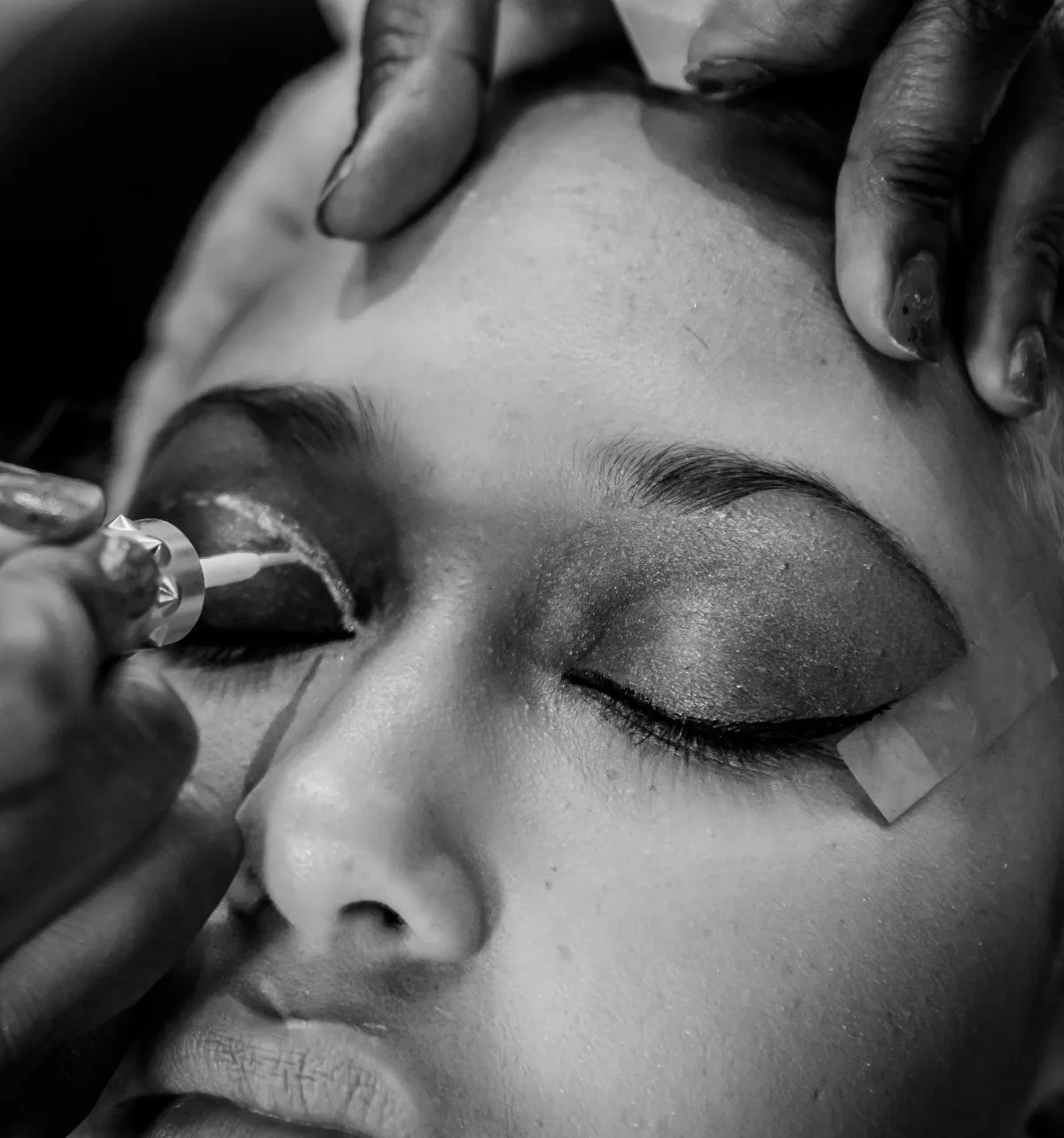
Brow lamination crossed from early adoption into early majority sometime in the last eighteen months. The brow lamination salon trend is no longer a question of whether clients want it. The question now is whether your menu reflects where demand already sits.
I track this through my classroom, a network of about thirty stylists and estheticians across New York, and industry data. All three inputs point the same direction. Brow lamination is in active growth, not hype, and the window for adding it before saturation closes is still open but narrowing.
How Brow Lamination Got Here
2018: Origin in Russia
Brow lamination emerged from Russian beauty professionals adapting lash lift chemistry to eyebrow hairs. The technique spread through Eastern European salons before reaching Western markets.
2019-2020: Early Adoption in Europe and the UK
UK brow bars began offering lamination as a premium add-on. London Brow Company and similar brands launched professional-grade kits. Demand was stylist-driven, not client-driven.
2021-2022: Celebrity and Social Acceleration
Rosie Huntington-Whiteley, Selena Gomez, and Bella Hadid were photographed with laminated brows. TikTok brow lamination content began generating millions of views. The hashtag #browlamination accumulated over 1 billion views.
2023-2024: Menu Integration
Salons and brow bars across the US added lamination as a standalone service. Over 5,000 new brow and lash studios opened globally in 2024. Training course enrollment surged at cosmetology schools and private academies.
2025-2026: Early Majority
Brow lamination is now a standard offering at chains like Ulta and independent brow studios alike. DIY kit sales rose 20% in Europe in 2024, indicating mainstream consumer awareness. The service is evolving toward softer, more natural finishes.
The pattern follows a familiar path: technique originates in one market, celebrities normalize it, social media amplifies it, and then salon menus catch up. What makes brow lamination distinctive in this cycle is how fast the training infrastructure developed. Multiple academies now offer one-day certification courses for licensed estheticians and cosmetologists, which has dramatically lowered the barrier to adding the service.
The Numbers Behind the Growth
The brow and lash service market is growing at an estimated 8.5% compound annual growth rate through 2033. That is not brow lamination alone, but lamination is a significant driver within that category.
The margin story is what should get your attention. A brow lamination treatment takes 30 to 45 minutes. Product cost per client is roughly $3 to $6. At an average service price of $75 to $120, you are looking at one of the highest-margin services available to an esthetician or salon owner. Compare that to a balayage appointment that ties up your chair for two to three hours with $20 in product.
The rebooking cycle reinforces the math. Lamination lasts four to eight weeks, meaning a single client books six to twelve times per year for the same service. That is a recurring revenue pattern most hair services cannot match.
Why Clients Are Choosing Lamination Over Alternatives
The consumer shift toward brow lamination is partly about aesthetics and partly about commitment level. The broader industry trend favors semi-permanent over permanent. Clients want results without long-term risk.
| Factor | Detail |
|---|---|
| Commitment level | Low (4-8 weeks) |
| Average price | $75-$120 |
| Service time | 30-45 min |
| Invasiveness | Non-invasive |
| Rebook frequency | 6-12x/year |
| Revenue per hour | $100-$240 |
| Factor | Detail |
|---|---|
| Commitment level | High (1-2 years) |
| Average price | $400-$800 |
| Service time | 2-3 hours |
| Invasiveness | Semi-permanent tattoo |
| Rebook frequency | 1-2x/year |
| Revenue per hour | $150-$300 |
| Factor | Detail |
|---|---|
| Commitment level | Low (3-6 weeks) |
| Average price | $20-$40 |
| Service time | 15-20 min |
| Invasiveness | Non-invasive |
| Rebook frequency | 8-12x/year |
| Revenue per hour | $60-$160 |
One brow artist I spoke with recommends lamination for nine out of ten clients as a starting point because it delivers a full, defined brow with no long-term risk. If the client loves the shape, they can commit to microblading later. If they change their mind, it grows out in weeks. That flexibility is driving adoption among younger clients especially.
The aesthetic itself is maturing. Clients in 2026 want laminated but lived-in brows: lift and structure without the overly glossy, overly stiff finish that defined earlier versions. When a trend starts developing subtypes, it is moving past its wow phase and into something sustainable.
What This Position on the Curve Means for Your Menu
If you are a salon or solo esthetician considering brow lamination, the early majority phase is the strongest window for adding a new service. The market awareness work has been done by early adopters. Clients already know the name. Training is widely available and affordable. You are not taking a risk on an unproven concept.
The pricing data supports that. Salons in major metros are charging $100 to $165 for a lamination-and-tint package. Even in smaller markets, $65 to $85 is the going rate for lamination alone. A solo esthetician doing four lamination appointments per day, three days per week, generates $780 to $1,440 in gross weekly revenue from one service with under $25 in product costs.
The add-on potential is also significant. Bundling lamination with tinting and shaping pushes the ticket to $120 to $180. A client who books a combined brow appointment and a lash lift in the same session is easily a $200 visit. That kind of stacking transforms a 60-minute block from a single service into a multi-treatment revenue driver.
Where to Be Cautious
Brow lamination is not at saturation yet, but the signs of eventual saturation are visible. DIY kits are proliferating. Drugstore brands are launching at-home versions. When the at-home market grows, professional salons need to differentiate on quality and customization, not just access.
The technique has a steeper learning curve than it appears. The chemical processing step requires precise timing, and over-processing can damage brow hairs. In Asia-Pacific markets, spas reported an 18% rise in combined brow and lash bookings in 2024, but complaints about inconsistent results also increased as less-experienced technicians entered the field. Quality control is the vulnerability at this phase.
Invest in proper training before adding lamination. A certification course from a reputable academy runs $150 to $400 online or up to $1,250 in person. That investment pays for itself in three to five appointments.
The Trajectory From Here
Brow lamination will continue growing through at least 2027 based on the market data and the demand patterns I am tracking. The service is still gaining menu share, training pipelines are expanding, and client awareness has not peaked.
Stylists who add it now will have twelve to eighteen months of growth-phase pricing power before competitive pressure drives prices down. If lip blush can fill books at $800 a session by specializing early, brow lamination at $100 can do the same on volume.
The trend is evolving, not fading. The shift toward softer, more natural lamination finishes signals a service that is maturing into a permanent menu category rather than a temporary offering. That is the best kind of trend to build around: one where client demand is growing and the technique has room to develop alongside it.