Seven of my eighteen students in the spring advanced cutting class asked to spend extra practice time on ghost layers. That is the single most-requested technique this semester, ahead of curtain bangs (which dominated requests for the last two years) and textured bobs.
I started paying attention to this shift in the fall. A few students brought in TikTok videos of the technique. By January, reference photos of ghost layers were showing up on nearly every mannequin station during free practice. When multiple students independently gravitate toward the same technique, that is not a fad. That is an adoption signal.
What Ghost Layers Actually Are
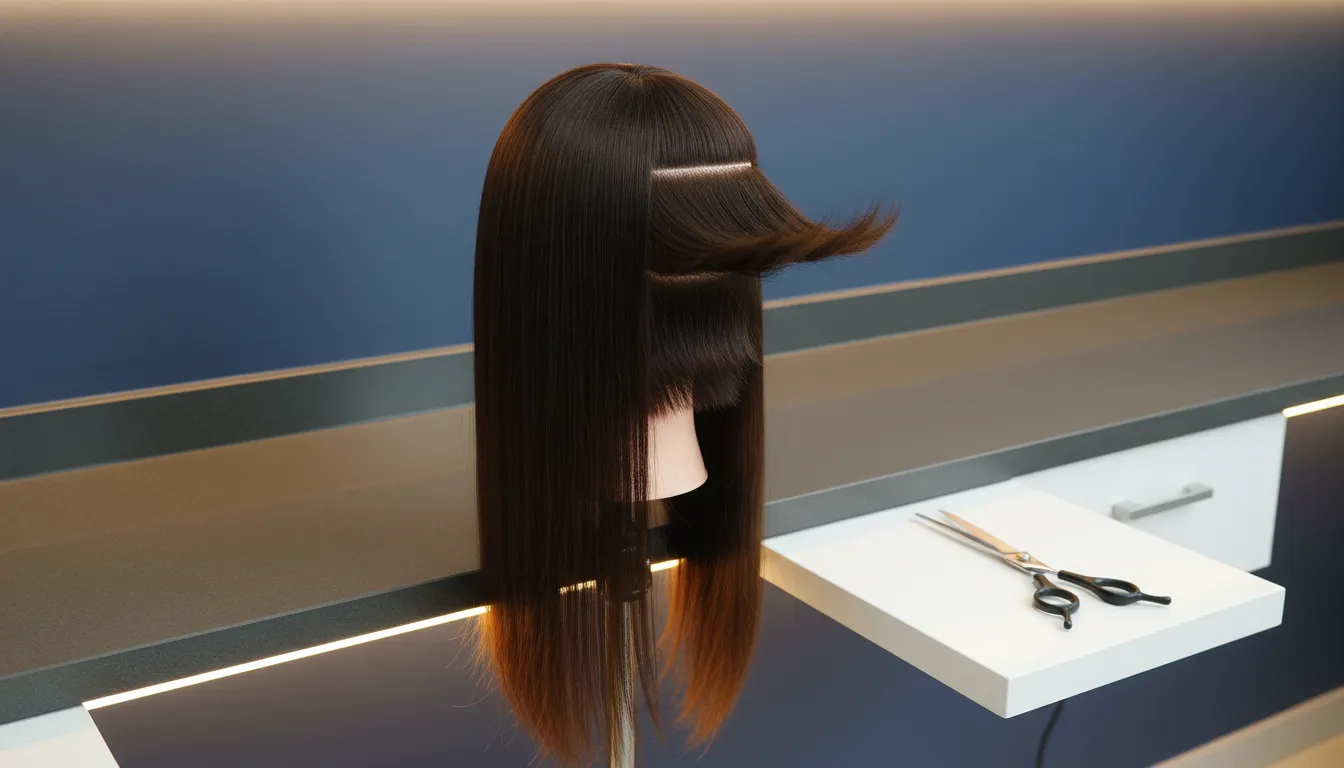
Ghost layers are internal layers cut beneath the top section of hair. They add movement and volume without visible layering on the surface. The hair looks like one length but moves like it has dimension.
The technique relies on point cutting and slide cutting at specific angles, typically holding a diagonal section at roughly 35 degrees and slicing only 1-2 inches from the longest pieces. The result is weight removal that the client cannot see but can feel immediately.
This is different from traditional layering, where the transitions between lengths are visible and intentional. Ghost layers hide under the top layer of hair, creating body that seems to come from nowhere. LA-based stylist Ramon Garcia, who helped popularize the technique, describes the effect as invisible shape engineering.
Why Students Are Drawn to It
Three reasons keep surfacing in my classroom conversations.
Clients are asking for it. Students who are already working part-time in salons report that clients bring in reference photos and specifically name “ghost layers.” That is the clearest demand signal a student can get.
It solves the length anxiety problem. A major frustration for newer stylists is the client who wants more movement but panics at the idea of losing length. Ghost layers let you add volume and shape while keeping the overall length intact. For students still building confidence in consultation, that is a safer conversation to navigate.
The technique transfers across hair types. Ghost layers work on fine hair that needs lift, thick hair that needs internal weight removal, and wavy or curly hair that benefits from reduced bulk. In a class with students headed toward different specializations, that versatility matters.
What I Am Seeing Behind the Chair
My own client requests confirm what students are reporting. Over the past four months, I have tracked ghost layer requests in my booking notes. They have gone from roughly one per week to three or four. The clients requesting them tend to be in the 25-40 range and come in with specific references rather than vague requests for “more volume.”
The retention angle is worth noting. Ghost layers grow out more gracefully than traditional layers because the shortest pieces blend back into the length within 10-12 weeks. Clients come back for maintenance trims, but without the urgency of visible grow-out. That is a different scheduling pattern than high-maintenance cuts, and it is worth factoring into your service planning.
The Technique Gap for Working Stylists
Here is where I get concerned. Ghost layers require precise angle control and a light hand with the shears. Overcutting by even half an inch creates visible steps instead of invisible shape. In my class, I spend two full sessions on the technique before students practice on mannequins, and most need three to four attempts before the layers truly disappear.
If you learned cutting in a traditional program that focused on uniform layers, elevation-based graduation, and blunt perimeters, ghost layers require a different muscle memory. The slide cutting motion in particular is not something every stylist practices regularly.
Point cutting into the interior at a 35-degree angle. Slide cutting from roughly 3 inches below the root to the mid-shaft. Working in narrow diagonal sections rather than horizontal panels. Checking your work by dropping the top layer and looking for any visible lines.
Taking sections too wide, which removes too much weight at once. Cutting too close to the perimeter, which creates visible steps. Using thinning shears instead of slide cutting, which produces a different texture. Not checking the fall after each section.
What This Means for Your Menu
Ghost layers are not a separate service category. They are a cutting technique that fits within your existing haircut pricing. But they do take longer than a standard trim, typically adding 10-15 minutes for a full ghost layer session on medium to long hair.
If you are not already comfortable with the technique, continuing education workshops on internal layering are increasingly available. Several brands including Kenra Professional and Davines have published detailed breakdowns of the method. Jatai International also offers educator content on invisible layering that covers the technical fundamentals.
I am adding a dedicated ghost layer module to my fall curriculum. When this many students ask to learn something, and this many clients ask for it by name, the technique has crossed from social media curiosity into real professional demand. That is the point where ignoring it starts to cost you.