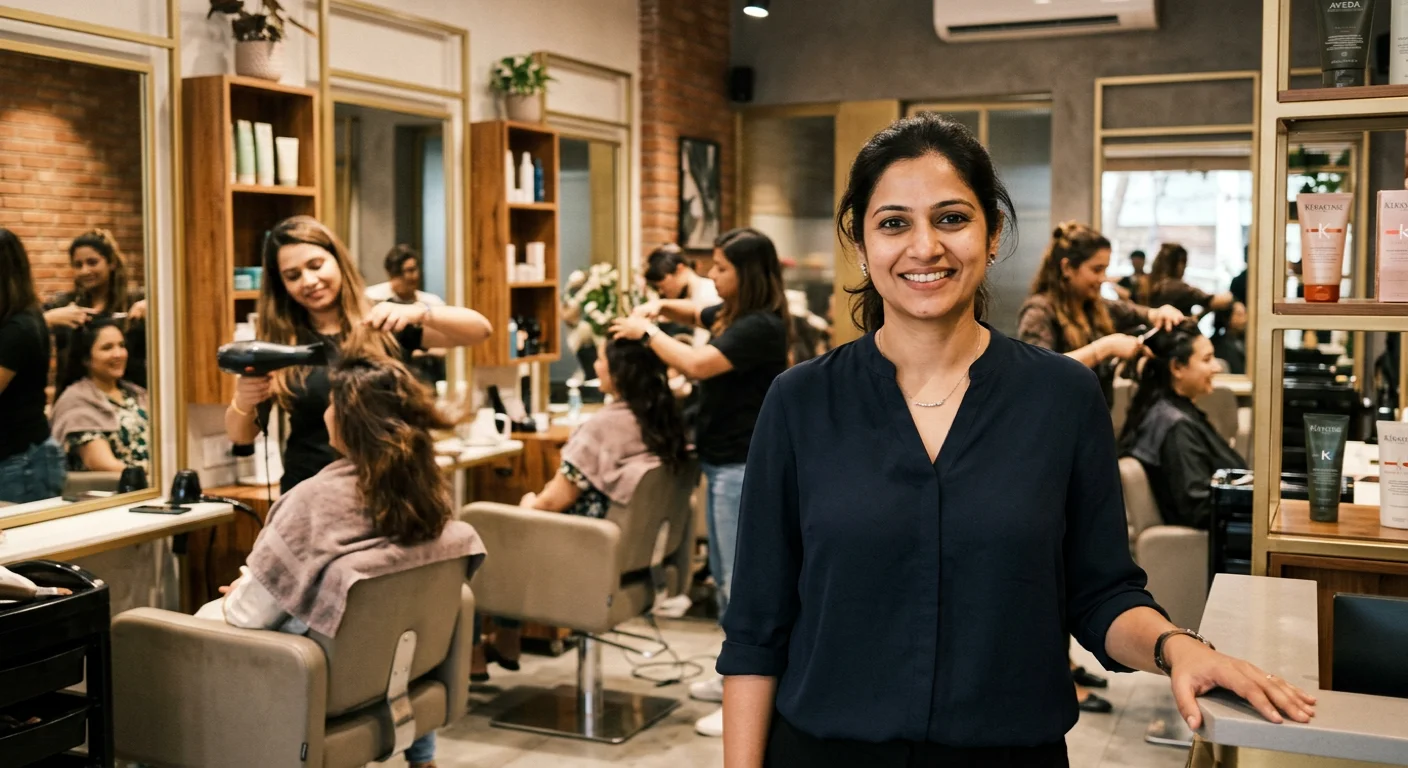
Nobody warns you that the promotion is permanent. Not the title. The distance.
I spent nine years behind a chair before I opened my first salon. During those years, I built friendships the way stylists do: standing next to someone for eight hours, trading stories between clients, covering each other’s books when life got complicated. Those relationships felt unbreakable. Then I became the person who signed the checks, and every single one of those relationships shifted. Some survived. Most didn’t. Not because of conflict. Because of math.
The first conversation that changed me
Seven months after opening my first location, I had to tell a stylist she wasn’t meeting the numbers I needed. She was good. Not great, but good, and she was kind, and clients liked her. She was also averaging $38 per hour in revenue when I needed $55 to keep her chair profitable after rent, product, and her commission.
I’d known her for five years. We’d worked side by side at a salon in Deep Ellum. I’d invited her to join me because I thought loyalty mattered more than metrics. It does matter. But it doesn’t pay the lease.
The conversation lasted twelve minutes. I showed her the numbers. I told her what I needed to see in 60 days. She cried. I didn’t, but only because I’d practiced the conversation in my car four times that morning. She hit the numbers. She stayed another two years. But she never texted me on weekends again.
That was the first time I understood: you don’t get to be the friend and the person who delivers hard news. You can be fair. You can be warm. But the power imbalance changes the temperature of every interaction, and pretending it doesn’t is how salon owners lose good people.
What the research says about isolation
I thought the loneliness was a personal failing. Turns out it’s structural. A study published in the Journal of Small Business Management found that more than half of small business owner-managers report significant feelings of occupational loneliness. A Cigna workforce survey found that 61% of business leaders say isolation actively hinders their performance.
Those numbers didn’t surprise me. What surprised me was recognizing my own behavior in them. I’d stopped eating lunch with my team. I’d started closing my office door during breaks, not because I was busy, but because I didn’t know how to be casual anymore. Every conversation carried a subtext: am I the boss right now, or am I Priya?
The answer, I eventually learned, is that you’re always the boss. Even when you’re laughing. Even at the holiday party. Even when you think you’ve turned it off.
You will become someone your old self wouldn’t recognize. Some of that will be growth. Some of it will be loss. The hard part is that you won’t know which is which for years.
Why managing salon employees broke my default setting
The beauty industry has a 37% annual turnover rate, and when people discuss solutions, they talk about pay, culture, flexibility. All real factors. But I’ve watched salon owners lose strong stylists for a reason that never appears in exit interview data: the owner confused being liked with being respected.
I did this for my first two years. I avoided corrective conversations because I didn’t want anyone to feel bad. I gave compliments I didn’t fully mean because I wanted the room to feel good. I said yes to schedule requests that hurt the business because I was afraid of the tension that comes with no. The result was a team that liked me, didn’t fully trust me, and didn’t know where they stood.
My best stylist at the time, a woman I’d hired out of cosmetology school and trained myself, told me she was leaving for a commission salon across town. When I asked why, she said: “I never know if you’re being honest with me or just being nice.” That sentence restructured my entire approach to leadership.
What I carry now
I run three locations. Twenty-two employees. I haven’t done a client’s hair in two years. The person I was at 26, standing behind a chair in someone else’s salon, would not recognize the person I’ve become. She’d probably think I’m colder. I’m not cold. I’m clear. The difference took me years to learn and longer to stop apologizing for.
I check in with my managers every Monday morning. I start by asking how they’re doing, not how the numbers look. I have hard conversations within 48 hours of noticing a problem instead of letting it build for weeks. I give honest feedback even when it’s uncomfortable, because I learned what happens when you don’t. I’ve handed off nearly every daily operation, and the salons run better than when I was in every room.
But I eat lunch alone most days. Not because I have to. Because I learned that the space between me and my team is the thing that makes honesty possible. I stopped trying to close that gap. I stopped treating it like a wound. It’s the cost of the job. And the job, even with that cost, is worth it.