My average tip on Saturday was 14%. My average tip on Tuesday was 23%. Same haircut. Same prices. Same barber.
I caught it because I started writing every tip down at the end of every appointment. Cash and card. 60 days, 247 cuts. I expected Saturday to be my best day in every category. Saturdays are the busiest day in the industry — around 40% of all barbering appointments happen at the end of the week, and that pattern holds in my chair too. But “busiest” and “best” turned out to be different things.
What I tracked and how
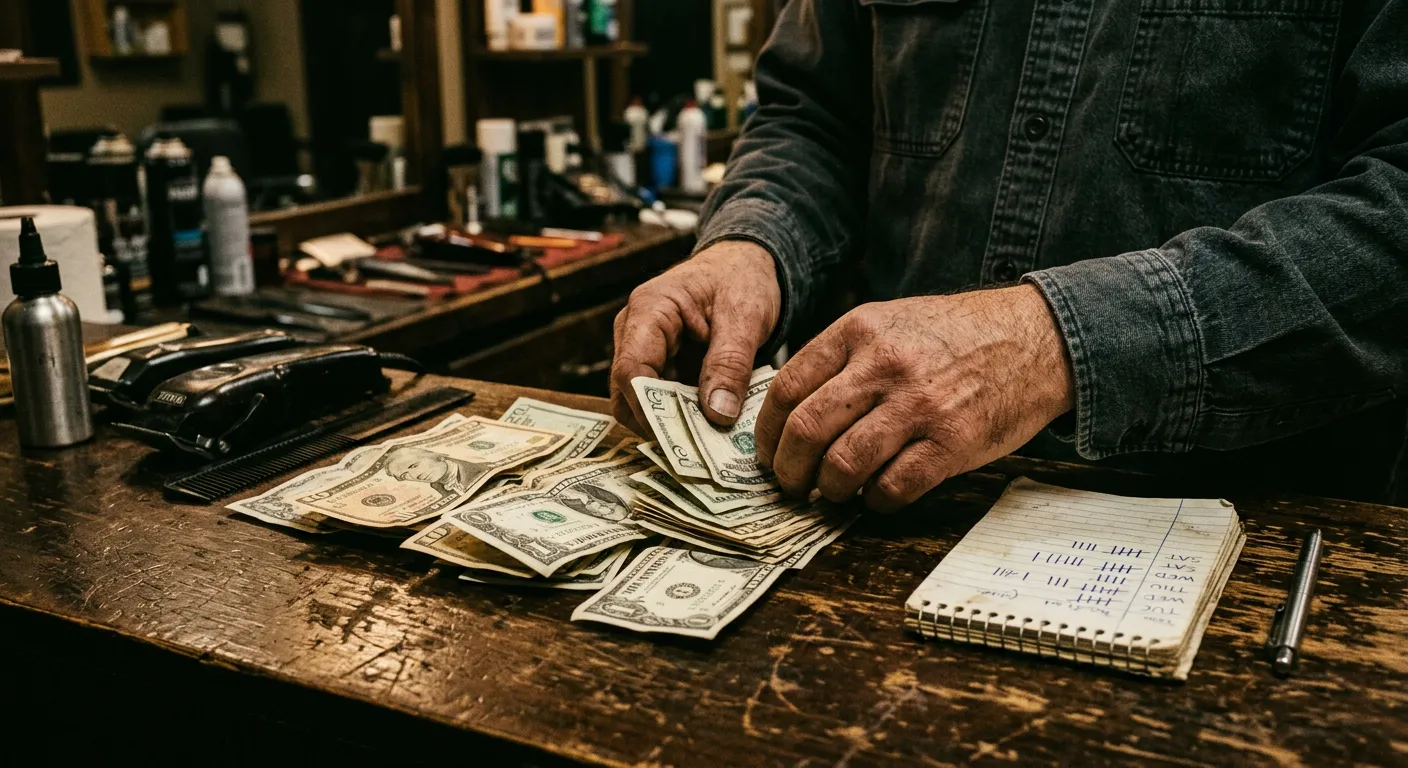
I run a one-chair shop. Solo. I keep a spiral notepad next to my clippers. After every cut I write three numbers: the service price, the tip, and the day. That’s it. Nothing fancy. No spreadsheets, no apps.
At the end of the week I added it up by day. Total tip dollars, total service dollars, tip percentage. Then I averaged the percentages across the 60 days.
Here’s what came out.
My average tip percentage by day
Saturday was my highest-volume day. 9 to 11 cuts. But the percentage was the worst by a clear margin. Tuesday had 4 to 6 cuts and brought in nearly double the percentage.
The dollar math
Bigger volume on Saturday still meant more total tip dollars on Saturday. That’s what fooled me for years. I’d count my Saturday cash and feel like a king. But the per-cut math told a different story.
That’s an $8.40 difference per client. Across a packed Saturday with 10 cuts I was leaving $84 on the floor compared to the same number of cuts on a Tuesday. Saturdays felt rich because the pile was bigger. The pile was bigger because I was running myself into the ground.
Why Saturday was a trap
I started watching the room. The pattern was obvious once I looked.
On Saturday I was running 10 to 20 minutes behind by noon. Clients waited. The next guy was in the chair before the previous guy finished tipping. There was no consultation. No “how do you like it” pause at the end. I rushed the lineup, rushed the brush-off, rushed the goodbye. The Square reader came out and I held my breath through the screen because I knew the dynamic had been off.
On Tuesday I had time to talk. Time to use the warm towel. Time to actually finish. Clients stood up relaxed instead of late.
The lesson is simple. Tip percentage tracks the experience, not the volume. One industry guide describes Saturdays as “a well-organized cyclone”. That cyclone is exactly what’s killing your tip rate.
✅ Track this for one month
You don’t need software. You need a notepad. Write the price, write the tip, write the day. Add it up at the end of each week. The pattern shows up fast. Most barbers I’ve talked to assume their Saturday is their best day. Half of them are wrong.
What I changed
I didn’t kill my Saturday. I have a mortgage. But I did three things.
First, I added 10 minutes of buffer between every Saturday appointment. I went from 9 cuts to 7. My Saturday tip percentage climbed from 14% to 19% in the next 30 days. Total tip dollars stayed almost flat because the percentage made up for the lost volume. See why buffer time pays for itself for the longer math on that.
Second, I started prioritizing Tuesday and Wednesday slots for my highest-tipping regulars. The ones I knew tipped 25% or better got first dibs on the slow-day calendar. They liked the feel of a calmer shop. I liked their wallets.
Third, I stopped feeling guilty about saying “I’m full” on Saturdays. The cyclone was a vanity metric. My weekly take is up 8% since I made the change. My back hurts less. For the rest of the system that lets me actually use this data, see booking features that pay for themselves.
What you should track
If you do nothing else this month, track these three numbers per cut.
Service price. Tip amount. Day of week.
That’s it. After 30 days you’ll know something about your business that 90% of barbers are guessing about. And you might find out your busiest day is also your worst.