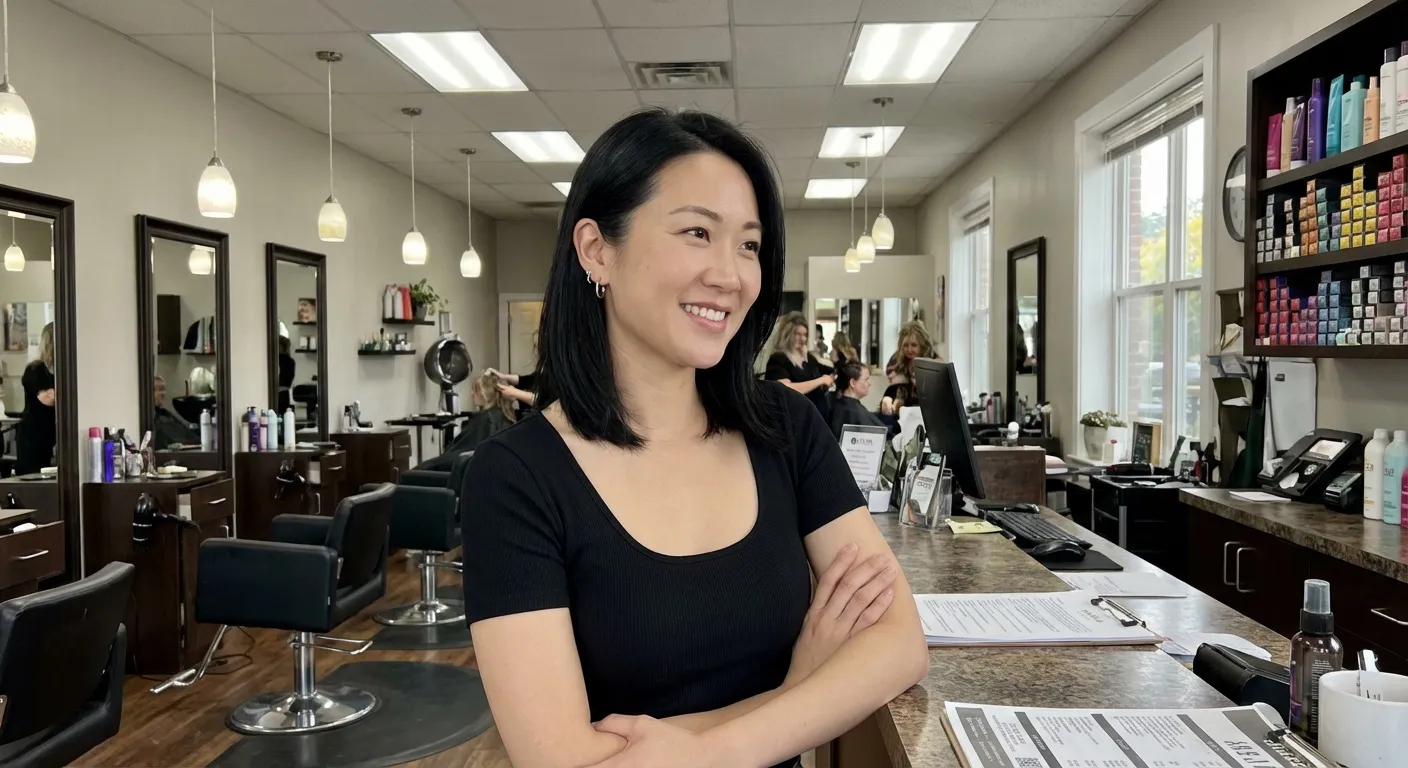
Every weekday morning I arrive 20 minutes before my first client. Fifteen of those minutes follow the same routine. I have done this for three years, and the mornings I skip it are the mornings that go sideways.
Six steps, same order, every day. Short enough to actually do. Specific enough to catch problems before they reach a client.
Why this salon opening routine works
A Miosalon study on first impressions found that clients form a judgment about your salon in the first seven seconds after walking in. Cleanliness, organization, whether the space feels ready. A rushed station communicates something you never intended.
I used to show up five minutes before my first appointment, toss my bag down, and start cutting. My station was technically clean from the night before, but it wasn’t set up. Tools in drawers instead of in position. I was physically present but mentally catching up for the first 20 minutes of the day.
The 6-step salon prep before clients arrive
I do these in order. The sequence matters.
Walk the floor
30 seconds. Look at the salon from the client's perspective. Entry clear? Magazines stacked? Retail shelf dusted? You stop seeing your own space after a while. This forces you to see it fresh.
Set your station
3 minutes. Pull out tools for the first service. Color? Set out bowls, brushes, foils, gloves. Cut? Lay out shears and combs. Fresh cape on the chair. Clean towel on the counter.
Read the day's schedule
2 minutes. Open your booking app and read every appointment. Not a glance. Actually read names, services, and notes. Look for new clients who need consultation time, color formulas to mix, and gaps you missed last night.
Review notes for your first two clients
3 minutes. What formula did you use last time? What did they mention wanting to try? Any concerns about dryness or breakage? This context changes the interaction completely.
Check supplies for morning services
2 minutes. If your 9 a.m. needs a specific toner and your 10:30 needs 30-volume developer, confirm both are on the shelf. This prevents the mid-morning panic run to the supply store.
Set one focus for the day
1 minute. Not a meditation. Just one thing. Maybe it is rebooking every client before they leave. Maybe it is recommending one product per visit. Pick it, hold it, start.
Total time: about 15 minutes. Some mornings 12. Never more than 18.
✅ Two clients, not ten
You don’t need to review every client’s notes in the morning. Just the first two. By the time you finish your second appointment, you will have a natural break to check notes for the next one.
What the station setup routine prevents
The floor walk catches things your closing checklist missed. A coffee cup on the reception desk. An empty soap dispenser. A product knocked behind the display. Small things clients notice.
The schedule read catches conflicts that crept in overnight. Salon Today recommends reviewing the schedule daily to identify gaps and problems before they cascade. A client might have booked a balayage into a cut-only slot at midnight. If you catch it at 8:45, you can adjust. At 10:15, you are already behind.
The client notes review changed my retention more than anything else. When you remember that Sarah wanted to go warmer, or that David is self-conscious about his crown, the client feels known. A Vagaro guide on client records found that detailed notes directly improve retention and service consistency. If you don’t have a notes system yet, the client notes approach for estheticians works just as well for hair.
The whole thing takes 15 minutes. I have done it every work morning for three years. The mornings I skip, I can feel the difference by 10 a.m. The mornings I do it, I am already ahead before the day starts.