A client sat up after a 60-minute corrective facial last March, looked at her skin in the mirror, and said the exact sentence I hear every week: “What should I be using at home?” I told her a gentle cleanser, a vitamin C serum, and SPF 30 minimum. She nodded, said thanks, and left. She did not buy anything because I had nothing to sell her.
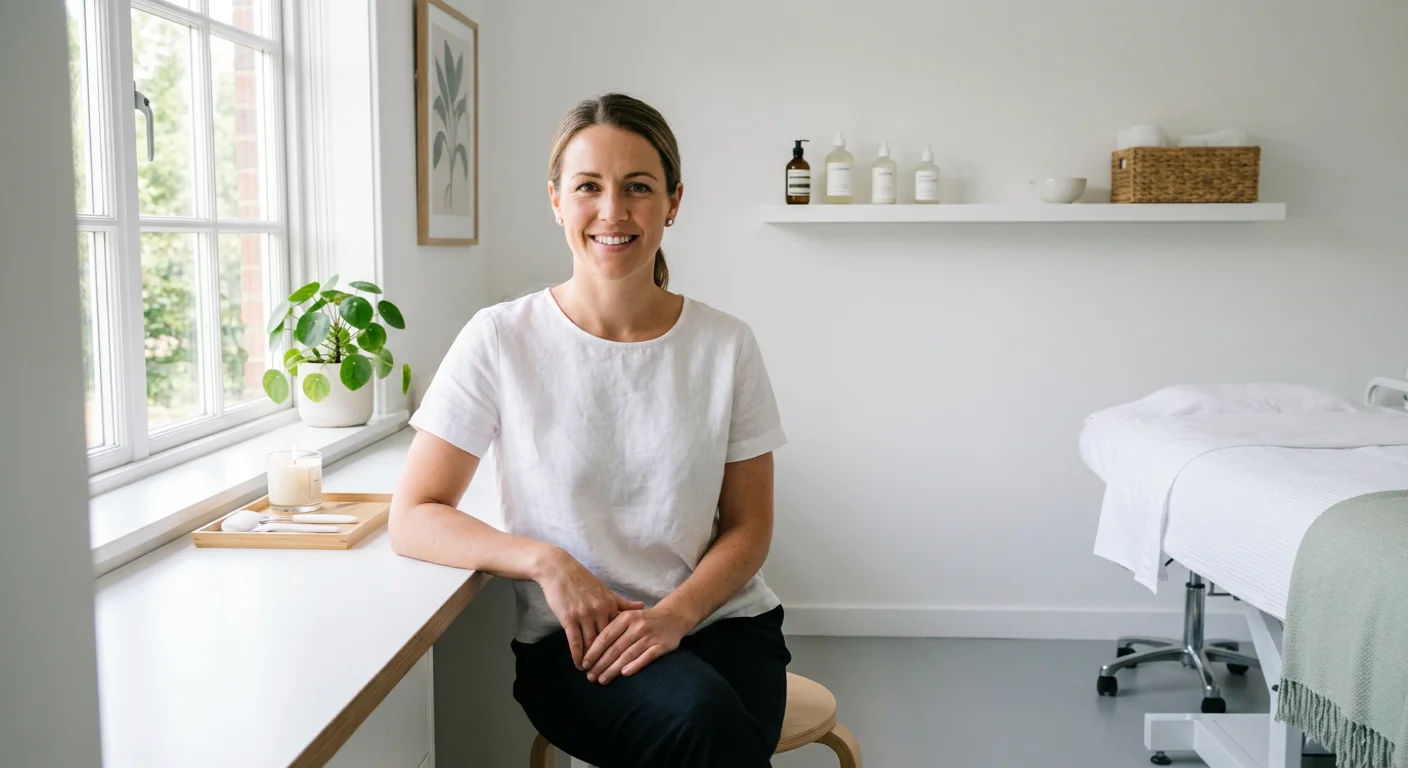
For eight years I operated a solo skincare studio with zero retail. My entire revenue came from hands-on services. I told myself product sales were for spas with display shelves and front desk staff. I was an esthetician, not a shop.
Then I ran the numbers and realized how much money I was leaving on the treatment bed.
The Before Numbers
From January through March last year, I tracked every metric I could pull from my booking software.
- 20 clients per week, averaging $130 per facial
- Monthly service revenue: roughly $10,400
- Product recommendations given verbally: almost every appointment
- Products sold: zero
- Retail as a percentage of total revenue: 0%
According to BusinessDojo’s esthetician benchmarks, the average solo esthetician generates 10 to 18% of revenue from retail. Medical estheticians hit 25 to 30%. I was at zero, which meant I was doing the hardest part (earning trust and making personalized recommendations) and skipping the part that actually pays.
The ASCP’s retail guidance makes the margin difference clear: service margins after product costs and time sit around 35 to 45%. Retail margins on professional skincare lines run 50% or higher. Every $40 serum I recommend and sell nets more margin per minute than any hands-on service I offer.
What I Changed
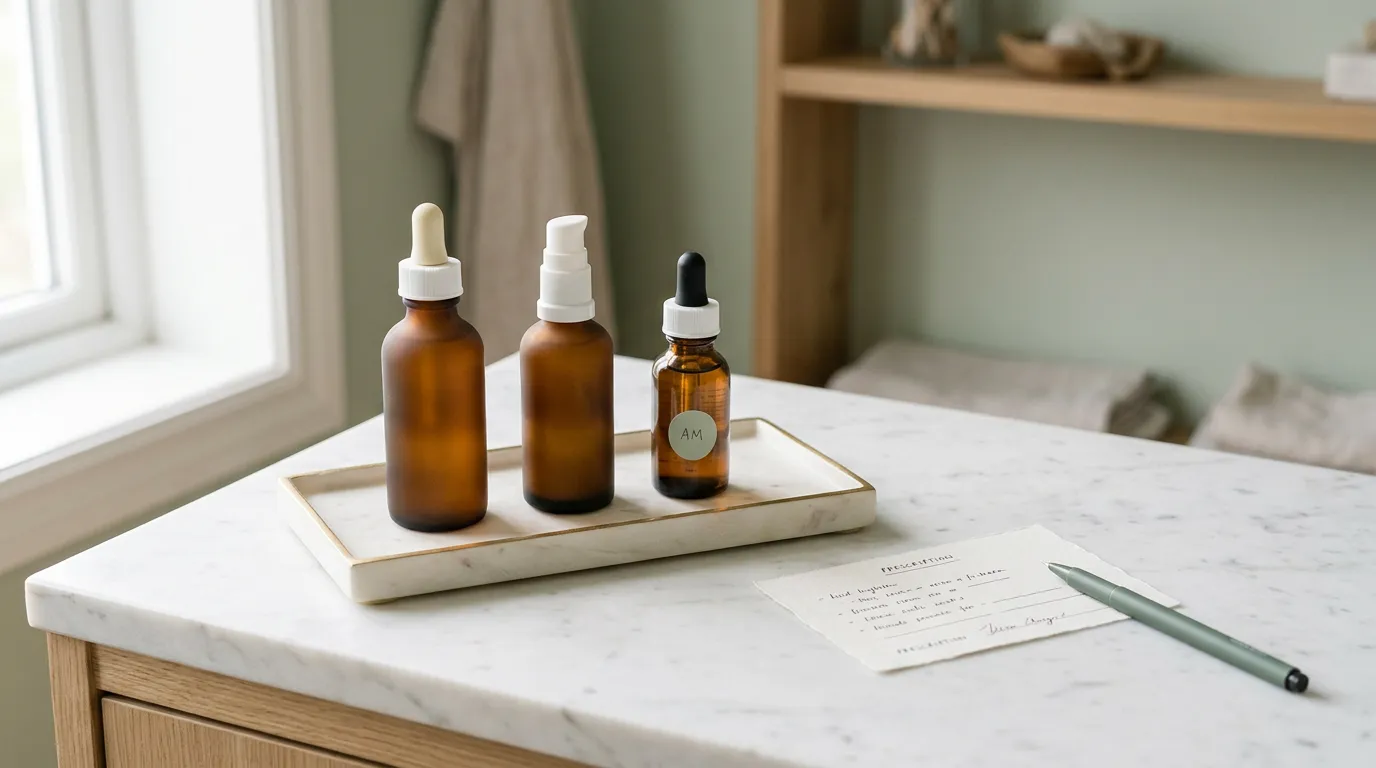
I picked one professional skincare line with no minimum order requirements, ordered six products that covered the concerns I treat most (acne, hyperpigmentation, dehydration, aging), and built a system around a simple printed card.
The card has three blank lines. After each facial, while the client is still on the bed and I am reviewing what I found during the treatment, I write three products on the card: one cleanser, one active, one protectant. I hand the card to the client and say: “These three will keep what we did today moving forward. I have all of them here if you want to take any home.”
That is the entire pitch. No sales pressure, no upsell stack, no percentage off if they buy today. Just a written prescription tied to the treatment I just performed.
✅ Write it down, every time
Verbal recommendations disappear before the client reaches their car. A physical card triggers the same authority response as a doctor’s prescription pad. The Skin Games treatment-to-retail framework confirms that linking retail recommendations directly to individual skin concerns can double conversion rates compared to generic product displays.
The After Numbers
I ran the same tracking for the next 90 days (April through June) after introducing the prescription card system.
| Metric | Result |
|---|---|
| Clients per week | 20 |
| Monthly service revenue | $10,400 |
| Retail revenue per month | $0 |
| Retail as % of total | 0% |
| Average transaction value | $130 |
| Clients who asked about products | ~60% |
| Products sold per month | 0 |
| Metric | Result |
|---|---|
| Clients per week | 20 |
| Monthly service revenue | $10,400 |
| Retail revenue per month | $1,800 |
| Retail as % of total | 14.7% |
| Average transaction value | $153 |
| Clients who received a card | 100% |
| Products sold per month | 38-45 |
Client volume did not change. Session length did not change. The extra 90 seconds writing three product names on a card added $1,800 per month in gross retail and roughly $900 in net margin.
Why This Works for Solo Operators
In a multi-room spa, retail displays and dedicated checkout staff handle the selling. When you run a one-room studio, you are the display, the advisor, and the checkout counter. That makes most retail advice useless for you because it assumes infrastructure you do not have.
The prescription card removes the infrastructure requirement. You need a stack of cards, a pen, and six products on a shelf behind your treatment bed. No display case. No point-of-sale upsell screen. No awkward checkout conversation.
It works because of timing. You write the card while the client is still lying down, right after you have spent 60 minutes treating their skin. You know exactly what it needs. The client knows you know. The recommendation carries the same weight as a referral from a dermatologist, because you are making it from the same position of hands-on clinical observation.
The conversion data bears this out. Pomp Beauty’s esthetician platform data shows that clients who receive personalized post-treatment product recommendations are 4 times more likely to purchase, with a 15% higher average order value compared to clients who browse a shelf unprompted.
The Product Selection That Works
Six to eight products is enough to cover the vast majority of skin concerns you will encounter. More SKUs means more inventory cost, more expired product, and more decision fatigue when you are writing the card. You should be able to pick three products for any client in under 30 seconds.
What I Adjusted After Month One
Two things changed. First, I stopped writing the card during wrap-up and started writing it during the mask phase. Clients rest for 10 to 15 minutes under a mask, and I was already using that time to clean tools and prep. Adding 60 seconds of card writing fit naturally and meant the card was ready the moment the client sat up.
Second, I started texting a photo of the card to the client after their appointment using my follow-up text system. Clients who received the photo purchased at a 40% higher rate in the following week compared to those who only received the physical card. The photo lives in their phone, which is where they make buying decisions later.
Six Months Later
Retail now sits at 17 to 19% of my total monthly revenue, depending on the product mix. That puts me right at the industry benchmark for independent estheticians. My cost per service stayed flat because retail margin covers the few minutes of extra work.
The one number that surprised me: client retention improved by 11%. Clients using the products I prescribed came back more consistently because they saw better results between appointments. Their skin held onto the treatment gains instead of resetting. That feedback loop, where retail supports retention and retention supports service revenue, was the part I never anticipated when I started.
The prescription card takes 90 seconds per client. The shelf holds six products. Setup cost me about $600 in initial inventory. If you are running a solo room and recommending products verbally without selling them, you are doing the hard work and giving away the margin.