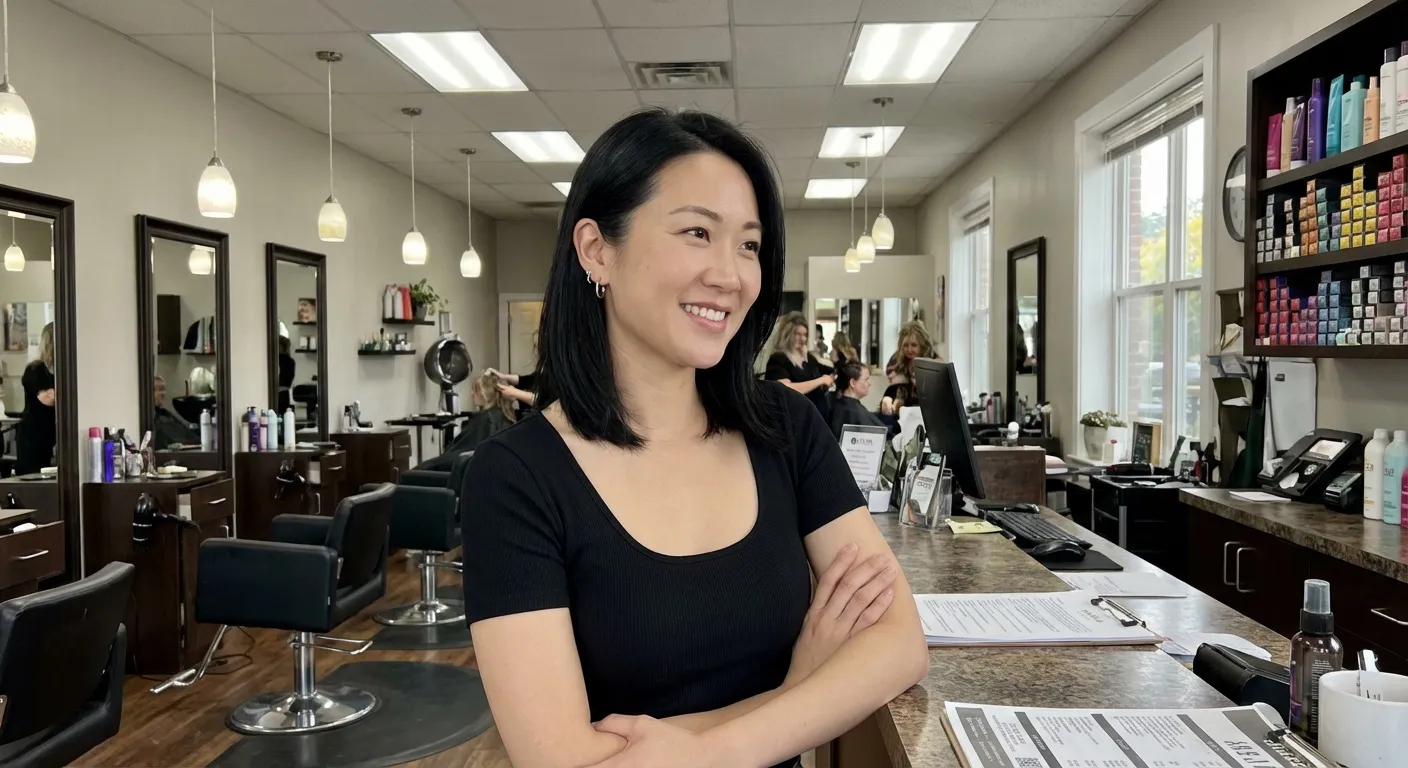
A client sat in my chair last year and spent 45 minutes telling me about her divorce. Every detail. The custody arrangement, the lawyer fees, the thing her ex said at Thanksgiving. I nodded, made sympathetic noises, and cut her hair. She left feeling lighter. I felt like I’d been hit by a truck.
This happens in salons constantly. A Psychology Today analysis found that nearly half of hairstylists’ clients share deeply personal problems in the chair, things they wouldn’t tell their doctor or their family. We’re behind them in a mirror, touching their head, in a private-feeling space. It makes sense that people open up. But the cumulative weight of absorbing everyone else’s problems has real consequences.
The emotional labor nobody trains you for
A 2024 narrative review published in Science Direct examined emotional labor in the hair and beauty industry and found a direct link between the “therapist role” and professional burnout. Salon workers listen and respond to clients who may reveal deeply personal, sometimes traumatic information. The researchers identified this as a form of compassion fatigue, the same phenomenon documented in nurses and social workers.
And the numbers reflect it. According to a Professional Beauty Association study cited by Pure Spa Direct, 41% of beauty professionals report feeling burnt out, compared to 28% of the general population. A separate survey of 1,750 hair professionals by Salonory found that 65% have experienced anxiety, burnout, or depression during their career.
Burnout in beauty vs. general population
The emotional weight isn’t just a personal problem. It’s a business problem. Burned-out stylists call in sick more, leave the industry faster, and deliver worse service when they do show up. A stylist running on empty can’t hold the focused, attentive conversation that builds client loyalty. The emotional labor that’s supposed to strengthen the relationship starts eroding it.
Where client conversation crosses into emotional labor
Let me be clear: I’m not saying stop talking to your clients. Connection is part of what makes salon work meaningful. When a regular tells me about her kid’s first day of school or a tough week at work, that’s rapport. That’s the relationship. Healthy conversation is part of why clients come back.
The line gets crossed when you become the container for someone’s ongoing emotional crisis. When a client uses every appointment to process trauma. When you leave work carrying their pain. When you dread seeing a name on your schedule because you know the next two hours will be heavy.
Refinery29 documented this pattern in a piece on “trauma dumping” in salons. The article interviewed stylists who described clients treating appointments like therapy sessions, expecting not just a haircut but emotional processing. One stylist said she went home and cried after certain clients. Another said she’d started drinking more to decompress.
This doesn’t have to be your normal.
How I set boundaries without losing clients
I was terrified the first time I redirected a client’s heavy conversation. Convinced she’d feel rejected and never come back. She booked her next appointment on the way out.
Here’s what I’ve learned works.
Redirect with warmth, not a wall. When a client starts going deep into something painful, I don’t shut it down. I acknowledge it once, then steer. “I’m sorry you’re dealing with that. How are things going with [lighter topic she’s mentioned before]?” Or: “I’m glad you’re working through that. Hey, have you decided what you want to do with your bangs today?” The shift feels natural if you do it gently.
Use the service as a natural boundary. “I’m going to need you to tilt your head forward for a minute.” “Let me focus on this section; it needs some precision.” These are legitimate service needs that also create a natural conversational pause. Silence in the chair is allowed. Not every moment needs to be filled.
Set time-based expectations at the start. For my chronically heavy-venting clients, I’ve started saying something early in the appointment: “I’ve got a packed book today, so I’m going to be a little more focused on the hair. But I want to hear about how you’re doing.” This frames the boundary as a scheduling reality, not a personal rejection.
✅ The redirect toolkit
Keep three or four light topics ready. A show everyone’s watching. Something funny that happened at the salon. A product you’re excited about. When you need to redirect, having something specific to pivot to is easier than fumbling for a topic in real time.
After-hours texts: the boundary most stylists don’t set
My second year in business, I gave clients my personal phone number. Big mistake. By year three I was getting texts at 10 p.m. on Sundays asking about appointment availability. Clients would send me photos of their hair at midnight asking if a color was normal. One client texted me on Christmas Day.
Dite’s guide to after-hours boundaries confirms this is nearly universal for beauty professionals who share their personal number. The solution I landed on was simple: a separate business number that goes to voicemail after 7 p.m. I put it in my booking confirmations and on my website. My personal number is for friends and family.
For clients who already had my personal number, I sent a text: “Hey! I’ve set up a dedicated salon line so I can keep better track of booking requests. Please text [number] for anything salon-related going forward.” Nobody pushed back. Most appreciated the clarity.
The boundary isn’t just about your evening. It’s about how you feel when you see a client’s name on your schedule the next morning. If you’ve been fielding their texts all weekend, you’re already tired before they sit down.
How burnout hurts your rebooking rate and revenue
This might sound soft, but it lands in hard numbers. Zenoti’s consumer research found that 81% of salon clients will pay more for a better experience. And a WifiTalents report shows that 70% of salon revenue comes from the top 20% of loyal clients.
Your best clients are paying for your skill and your attention. When emotional exhaustion eats into that attention, the service quality drops. You rush through consultations. You stop remembering details. You lose the energy that made clients love you in the first place.
I’ve seen it in my own numbers. During a stretch last winter when I was carrying too much from certain clients, my rebooking rate dipped from 58% to about 48%. I was doing the same cuts, the same colors. But I was distracted and flat, and clients noticed. When I started managing the emotional load more deliberately, the rate climbed back within two months.
💡 You're not a bad person for having limits
Boundaries protect the relationship. A stylist who dreads a client will eventually find reasons to shorten that appointment, rush the service, or stop trying. Redirecting a heavy conversation keeps you present and engaged, which is better for both of you.
Practical boundary-setting strategies for stylists
I no longer carry my clients’ problems home. That’s not coldness. That’s survival. Here’s my current framework.
I listen for about five minutes if someone needs to vent. After that, I redirect. Five minutes of genuine attention is more than most people get from anyone in their day.
I keep a mental wall between the chair and the rest of my life. When I lock the salon door, the conversations stay inside. This took practice. Journaling for five minutes after work helped me process and let go in the early days.
I recommend resources when the situation calls for it. “It sounds like you’re going through a lot. Have you thought about talking to someone who can really help with this?” Framing it as an upgrade, not a dismissal, works. You’re not a therapist, but you can point toward one.
And I track my energy as seriously as I track my revenue. If I’m ending every day exhausted, something is off, and it’s usually not the haircuts. Bringing these challenges to your weekly staff meetings can help the whole team develop healthier boundaries together.
The salon chair is an intimate space. Clients will always share their lives with you, and that’s part of what makes this work rewarding. But you get to decide how much you hold. Setting that boundary doesn’t cost you clients. Burning out does.